
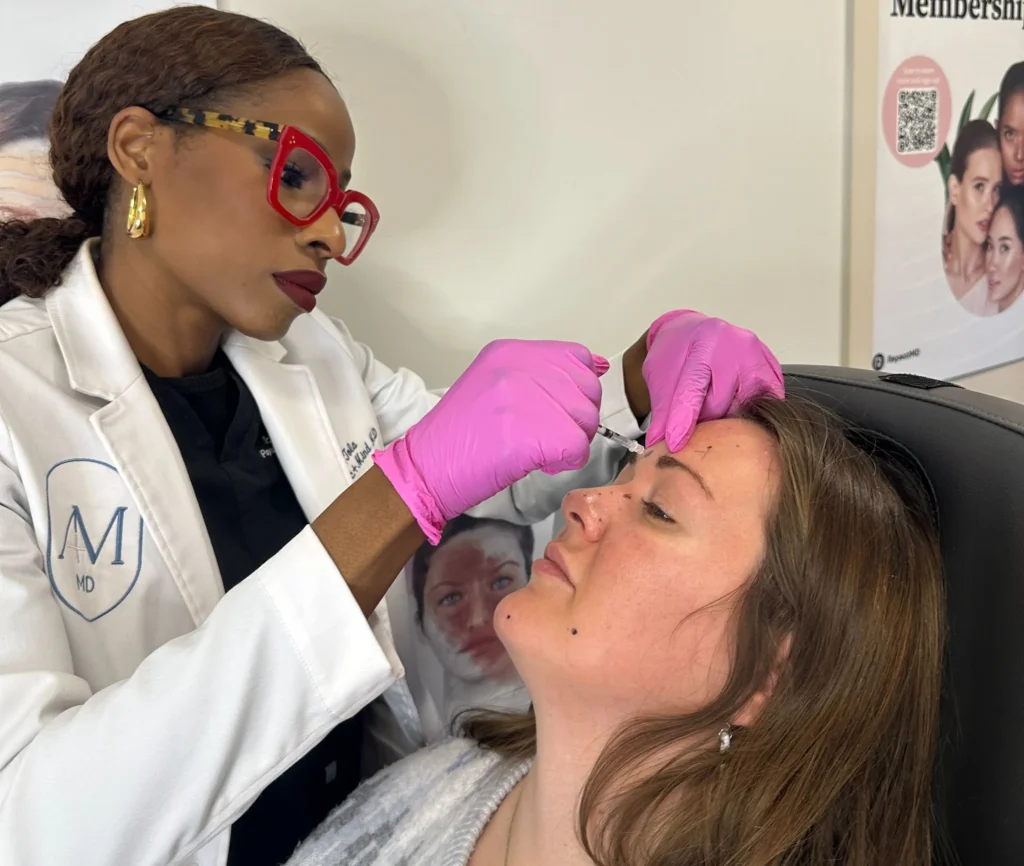
Botox results typically last 3 to 4 months for most patients, though this can vary depending on the treatment area, muscle activity, and individual response. As the neuromodulator gradually wears off, muscle movement returns, and treated lines begin to reappear. Because Botox works by temporarily reducing muscle activity rather than permanently altering tissue, maintenance treatments are required to sustain results.
At Aesthetic + Mind MD in Wellesley, MA, Botox is approached as a precision-based treatment designed to control muscle movement in a targeted, predictable way. Rather than focusing on short-term correction alone, treatment plans are structured to maintain consistent results over time. Understanding how long Botox lasts—and what influences its duration—helps patients plan treatments more effectively and maintain natural-looking outcomes.
What to Expect from Botox Results
Botox results develop gradually as the neuromodulator begins to influence targeted muscle activity. Rather than producing an immediate change, the treatment works over time to reduce the intensity of muscle contractions that contribute to dynamic wrinkles. This controlled reduction in movement allows the skin to appear smoother while maintaining natural facial expression.
At Aesthetic + Mind MD, Botox is administered with a precision-based approach that focuses on balancing muscle activity rather than eliminating it entirely. This allows for results that are refined and natural-looking, with improvements that align with each patient’s facial structure and movement patterns.
When Botox Starts Working After Treatment
Botox typically begins to take effect within 3 to 5 days after treatment, with full results developing around 10 to 14 days. During this time, patients may notice a gradual softening of muscle movement as the neuromodulator begins to block nerve signals to targeted muscles.
Because results build progressively, it is important to allow sufficient time for the treatment to fully settle before evaluating outcomes. This timeline helps ensure that results are assessed accurately and that any adjustments, if needed, are made at the appropriate time.
How Botox Softens Wrinkles and Prevents Movement
Botox works by temporarily inhibiting the communication between nerves and muscles, reducing the ability of targeted muscles to contract. This decrease in movement helps soften existing wrinkles and prevents them from becoming more pronounced over time.
By limiting repetitive muscle activity, the skin is given an opportunity to smooth out, particularly in areas such as the forehead, glabella, and around the eyes. This mechanism allows Botox to address both current lines and the underlying cause of wrinkle formation, supporting more consistent and long-term improvement.
How Long Does Botox Last?
Botox typically lasts 3 to 4 months for most patients, though the exact duration can vary depending on the treatment area and individual response. Results follow a predictable timeline—gradual onset within the first two weeks, peak effect around one month, and a slow return of muscle activity as the neuromodulator wears off. Because Botox does not permanently alter muscle function, maintenance treatments are required to sustain results over time.
This temporary effect is part of what makes Botox a controlled and adjustable treatment. By timing treatments appropriately, patients can maintain consistent smoothing of dynamic wrinkles while preserving natural movement.
Typical Botox Longevity and Results Timeline
After full results develop at approximately 10 to 14 days, Botox typically maintains its effect for several months before gradually diminishing. Most patients begin to notice a return of muscle movement around the 8 to 12 week mark, with visible lines slowly reappearing as activity increases.
To maintain consistent results, treatments are commonly scheduled every 3 to 4 months. This timing helps prevent full return of muscle activity, allowing for more stable, long-term improvement in wrinkle appearance.
What Affects How Long Botox Lasts
At Aesthetic + Mind MD, Botox longevity is influenced by several factors, including treatment area, dosage, and muscle strength. Areas with stronger or more active muscles, such as the forehead or masseter, may metabolize Botox more quickly, leading to a shorter duration of effect.
Individual metabolism and treatment consistency also play a role. Patients who receive Botox regularly may experience longer-lasting results over time, as repeated treatment can help condition targeted muscles. This variability highlights the importance of personalized treatment planning to optimize both duration and overall outcomes.
How Long Does Botox Last in Different Areas?
Botox longevity varies by treatment area due to differences in muscle size, strength, and frequency of use. Areas with larger or more active muscles tend to metabolize Botox more quickly, while smaller or more isolated muscle groups may retain results longer. Understanding these differences helps guide both treatment planning and maintenance timing, allowing for more consistent and predictable outcomes.
How Long Does Forehead Botox Last?
Forehead Botox typically lasts 3 to 4 months, though patients with stronger or more expressive forehead muscles may notice movement returning closer to the earlier end of that range. Because this area is involved in frequent, repetitive movement, Botox tends to wear off more gradually as muscle activity resumes.
With consistent treatment, results may become more stable over time as muscle activity is better controlled. Regular maintenance can help preserve a smoother appearance while preventing lines from becoming more pronounced between treatments.
How Long Does Masseter Botox Last?
Masseter Botox often lasts 4 to 6 months, making it one of the longer-lasting treatment areas. This is due to the size and density of the masseter muscle, as well as the higher dosing typically required to achieve both functional and aesthetic results.
In addition to reducing clenching or grinding, repeated treatments may gradually decrease muscle bulk over time. This can contribute to longer-lasting contouring effects and more consistent results with ongoing treatment.
How Long Does Jawline Botox Last?
Jawline Botox generally lasts 3 to 4 months, though this can vary depending on the muscles being targeted and the purpose of treatment. Whether used for contouring, reducing tension, or improving balance, the duration is influenced by how frequently the muscles are engaged.
Because this area can involve multiple muscle groups, results may soften at different rates. A tailored maintenance schedule helps ensure that contour and definition remain consistent over time.
How Long Does Neck Botox Last?
Neck Botox typically lasts 3 to 4 months, though results may begin to fade sooner in individuals with highly active neck muscles. Daily movements such as speaking, swallowing, and posture-related muscle engagement can influence how quickly Botox is metabolized in this area.
With proper dosing and consistent treatment intervals, Botox can help soften the appearance of vertical neck bands and improve overall smoothness. Maintenance treatments are often recommended to sustain these results.
How Long Does Glabella Botox Last?
Glabella Botox generally lasts 3 to 4 months, and in some cases may last slightly longer with regular treatment. This area often responds well because of its defined muscle pattern, allowing for precise targeting and controlled relaxation.
Over time, consistent treatment can help reduce the intensity of frown lines by limiting repetitive muscle contraction. This can lead to smoother, more sustained results with less noticeable reactivation between sessions.
Factors That Affect Botox Longevity
Botox duration is not identical for every patient, as several variables influence how long results are maintained. While the average timeline falls within the 3 to 4 month range, differences in anatomy, treatment approach, and individual physiology can affect how quickly the neuromodulator is metabolized. Understanding these factors helps set realistic expectations and allows for more precise treatment planning.
At Aesthetic + Mind MD, Botox is administered with attention to these variables to optimize both longevity and consistency. Rather than applying a uniform approach, treatments are adjusted based on how each patient’s muscles function and respond over time.
Dosage, Treatment Area, and Muscle Activity
The amount of Botox used, the specific treatment area, and the strength of the targeted muscles all play a significant role in how long results last. Larger or more active muscles, such as those in the forehead or jaw, may require higher dosing and may metabolize Botox more quickly due to frequent movement.
Treatment precision is also important, as accurate placement allows for more effective control of muscle activity. When dosing and placement are optimized, results tend to last longer and appear more balanced across the treated area.
Metabolism and Frequency of Botox Treatments
Individual metabolism influences how quickly the body processes Botox, meaning some patients may experience shorter or longer durations of effect. Those with faster metabolic rates or higher levels of physical activity may notice results wearing off sooner.
Over time, consistent Botox treatments can help extend longevity by gradually conditioning the targeted muscles to contract less forcefully. This can lead to more sustained results and a more predictable maintenance schedule with continued treatment.
Botox Maintenance Schedule and Touch-Ups
Maintaining Botox results requires a consistent treatment schedule that aligns with how the neuromodulator wears off over time. Because Botox gradually loses effectiveness as nerve signaling returns, planning treatments at appropriate intervals helps prevent full muscle reactivation and keeps results more stable. Rather than waiting for lines to return fully, a proactive approach allows for smoother, more controlled outcomes.
This structured maintenance strategy is an important part of achieving long-term, natural-looking results. By timing treatments correctly, patients can avoid noticeable fluctuations in muscle movement and maintain a more consistent appearance.
How Often Can You Get Botox Treatments
At Aesthetic + Mind MD, Botox treatments are typically scheduled every 3 to 4 months, depending on how quickly an individual metabolizes the product and how their muscles respond. This interval allows for continued control of muscle activity without overtreatment.
In some cases, timing adjustments may be recommended based on specific treatment areas or patient goals. Over time, consistent treatment can help extend the duration of results, allowing for a more predictable and personalized maintenance schedule.
Signs It’s Time for a Botox Refill
One of the earliest signs that Botox is wearing off is the gradual return of muscle movement in previously treated areas. Patients may begin to notice increased expression in areas such as the forehead, glabella, or around the eyes, followed by the reappearance of fine lines.
Rather than waiting until lines are fully visible again, scheduling a refill at the first signs of movement can help maintain smoother results. This approach supports continuity in treatment and helps preserve the overall effect without significant fluctuation between sessions.
Botox Side Effects and Recovery Timeline
Botox is generally well-tolerated, with most side effects being mild and temporary. Because the treatment involves small injections into targeted muscles, the recovery process is minimal and does not require downtime. Understanding the typical recovery timeline helps set expectations and allows patients to plan accordingly.
Most patients are able to return to normal activities immediately after treatment, with only minor, short-lived effects at the injection sites. These responses are part of the body’s normal reaction to the injection process and typically resolve without intervention.
How Long Does Botox Bruising Last
Bruising from Botox, when it occurs, typically lasts 3 to 7 days, though in some cases it may persist slightly longer depending on individual healing response. Bruising is usually mild and localized to the injection site, and it gradually fades as the body reabsorbs the blood under the skin.
Factors such as skin sensitivity, medications, and injection technique can influence the likelihood and duration of bruising. While not everyone experiences bruising, understanding this possibility helps patients anticipate the short-term recovery process.
Tips for Managing Side Effects After Treatment
After Botox treatment, simple post-care measures can help minimize side effects and support optimal results. Patients are generally advised to avoid excessive pressure on treated areas, remain upright for several hours, and limit intense physical activity immediately after treatment.
Applying cold compresses, when appropriate, may help reduce swelling or bruising. Following provider-specific aftercare instructions is important, as proper care supports both comfort and the overall effectiveness of the treatment.
Maintain Consistent, Natural-Looking Botox Results
Maintaining Botox results requires a structured approach that focuses on timing, precision, and long-term planning. Rather than treating Botox as a one-time solution, consistent treatments help regulate muscle activity over time, resulting in more stable, natural-looking outcomes. This approach minimizes fluctuations in movement and supports a smoother, more controlled appearance across treatment cycles.
By following a personalized maintenance schedule, patients can preserve results while avoiding overcorrection or abrupt changes. This allows Botox to function as a preventative and corrective treatment, supporting long-term skin smoothness while maintaining natural facial expression.
Why Choose Aesthetic + Mind MD for Botox in Wellesley, MA
At Aesthetic + Mind MD in Wellesley, MA, Botox is administered using a precision-guided, physician-directed approach that prioritizes balance and facial harmony. Treatments are customized based on muscle anatomy, movement patterns, and individual goals, ensuring that results are both effective and natural-looking.
Rather than applying a standardized technique, the focus is on controlled muscle modulation and long-term consistency. This approach allows patients to achieve refined results that evolve predictably over time.
Schedule Your Botox Consultation Today
If you’re considering Botox or looking to maintain your current results, scheduling a consultation is the next step. A personalized evaluation allows your provider to assess your facial movement, discuss your goals, and develop a treatment plan tailored to your needs.
To get started, contact Aesthetic + Mind MD at (617) 221-8337 or visit 332 Washington St, Suite 360, Wellesley, MA 02481. A consultation provides the foundation for consistent, natural-looking Botox results supported by expert care.
